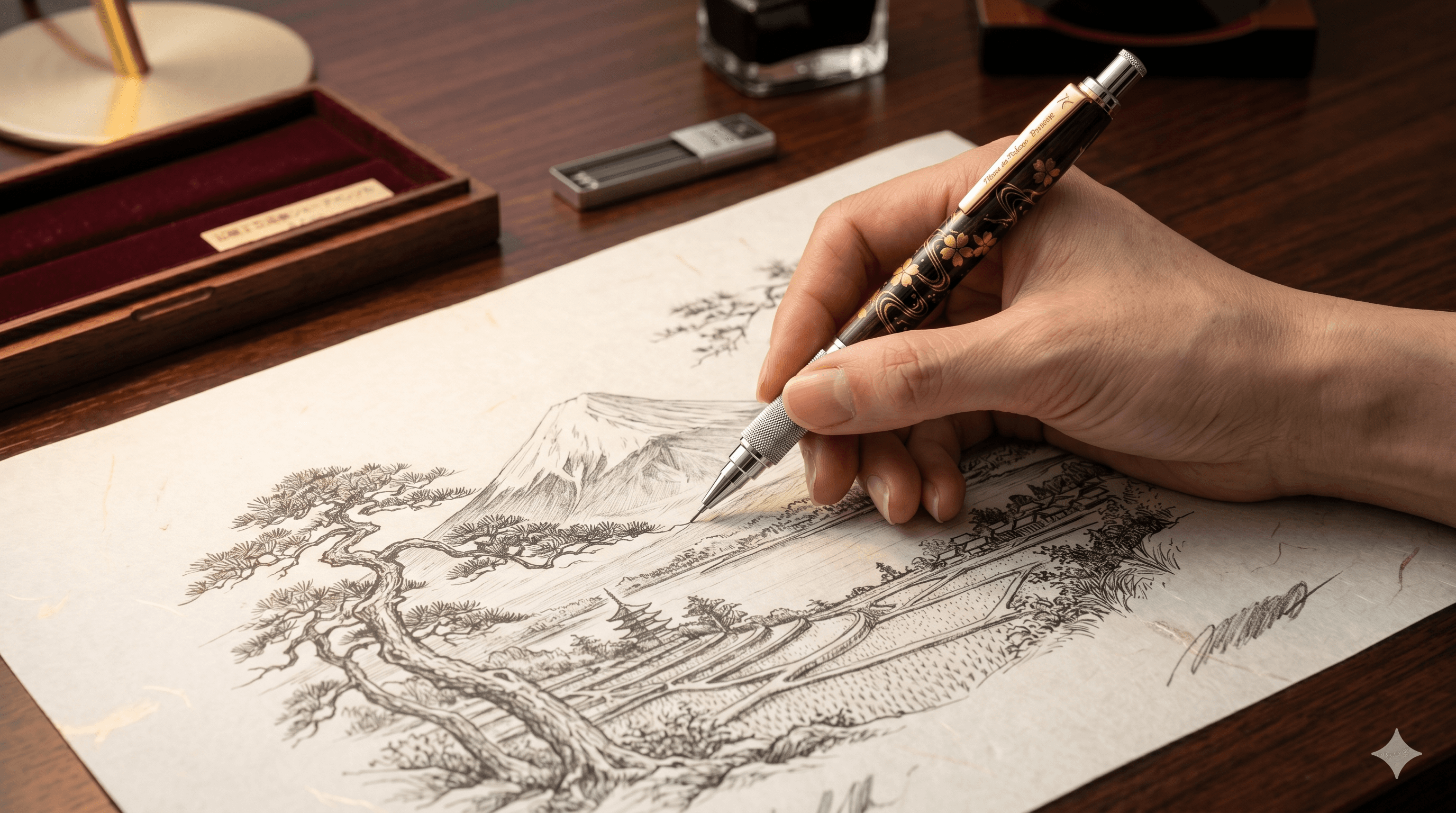
Objects/Writing Instruments/Urushibara Atelier
Maki-e Lacquer · Wajima
Maki no Takumi
Sakura-nagashi — “blossoms upon the flowing stream”
It is, on paper, an absurd proposition: a mechanical pencil that costs as much as a small car. A 0.5-millimetre lead — the most disposable mark a person can make, erasable, impermanent, designed from the outset to be worn away — sheathed in a body that takes the better part of a year to complete. The contradiction is not an accident. It is the entire point.
The piece is made by the Urushibara atelier of Wajima, on the Noto Peninsula, where the family has worked urushi — natural lacquer — since 1789. For seven generations they did not make pens at all. They lacquered saya: the scabbards of samurai swords, finished in the deep, layered black that only Wajima lacquer achieves. When the Haitōrei edict of 1876 stripped the samurai of their right to bear blades, the workshops that dressed those blades had a choice — adapt or vanish. The Urushibara line made a quiet decision that has defined it ever since. The hand that had sheathed the sword would now sheath the thing that replaced it: the pen.
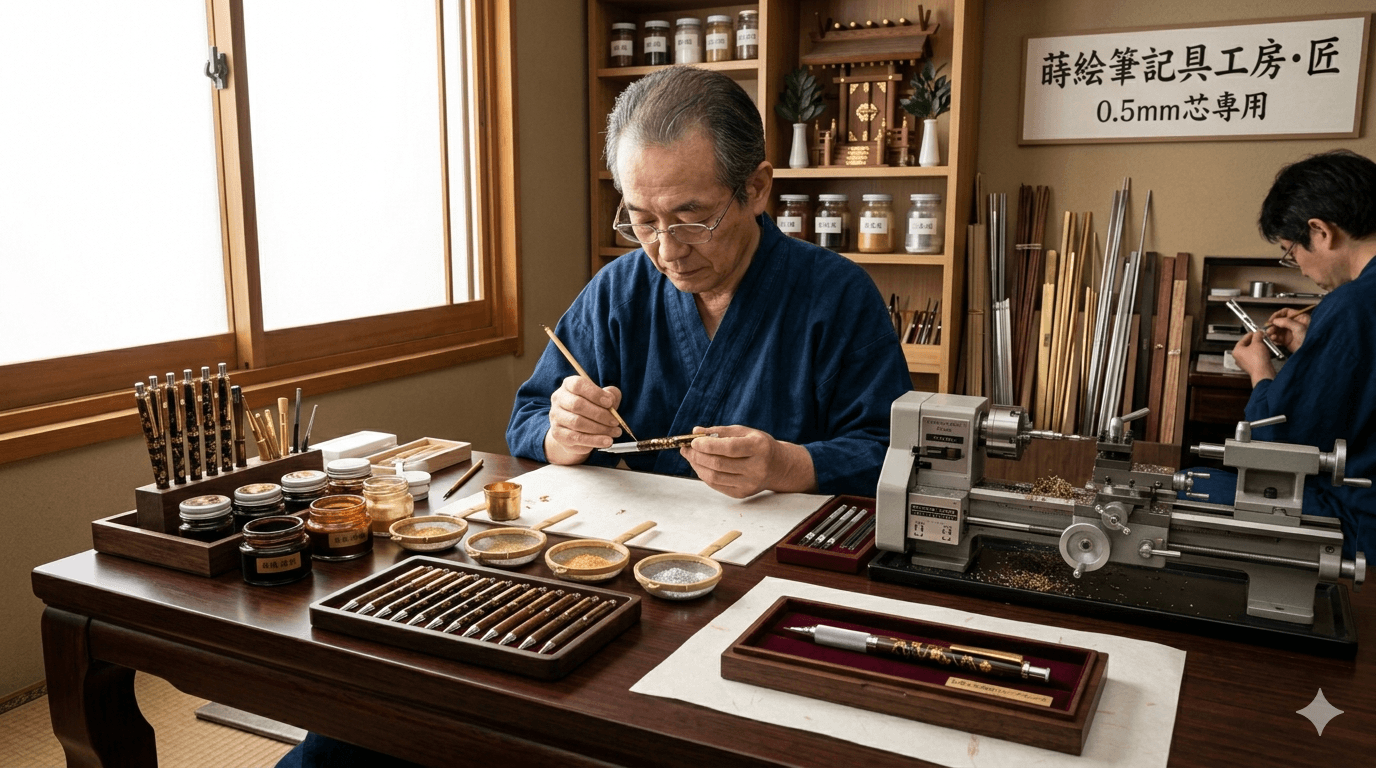
The body is kuro-gaki, the rare black-streaked heartwood of the persimmon, which a tree produces only once in perhaps a century and never on command. Over it are laid more than forty coats of raw urushi, each one brushed by hand and cured not by drying but by absorbing moisture, sealed for days at a time in a humidity cabinet called a muro. Rush the lacquer and it clouds. There is no way to hurry it, and no way to fake it.
The decoration is togidashi maki-e, the most exacting of the sprinkled-gold techniques. Powdered Kanazawa gold — 24-karat, beaten and milled to a fineness graded like flour — is scattered onto wet lacquer to draw the cherry blossoms and the current that carries them. Then the entire design is buried under further coats of black lacquer, and the master polishes it back down by hand, with charcoal and finger, until the gold rises flush to the surface and the picture seems to float beneath glass. A single error in the final polishing destroys eleven months of work. There is no repair. The piece is begun again.
“We spend a year on an object
made to be worn away.”— Urushibara Sōichirō, ninth-generation master
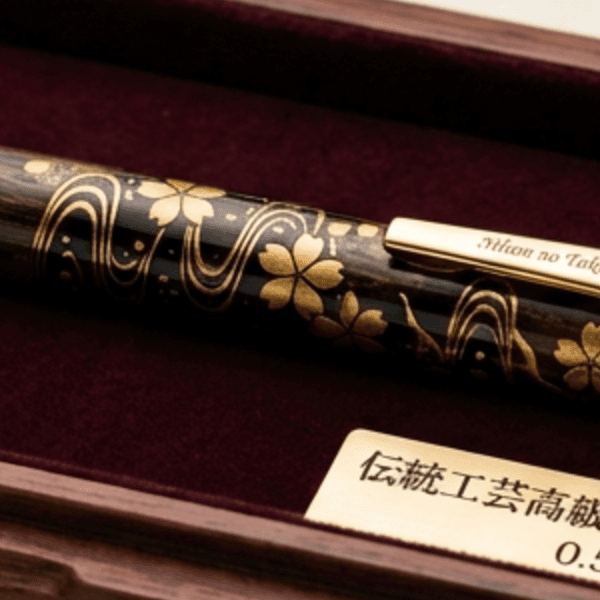
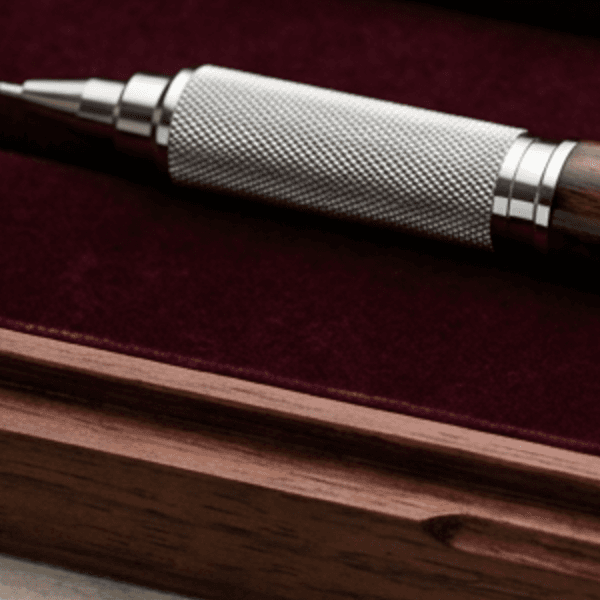
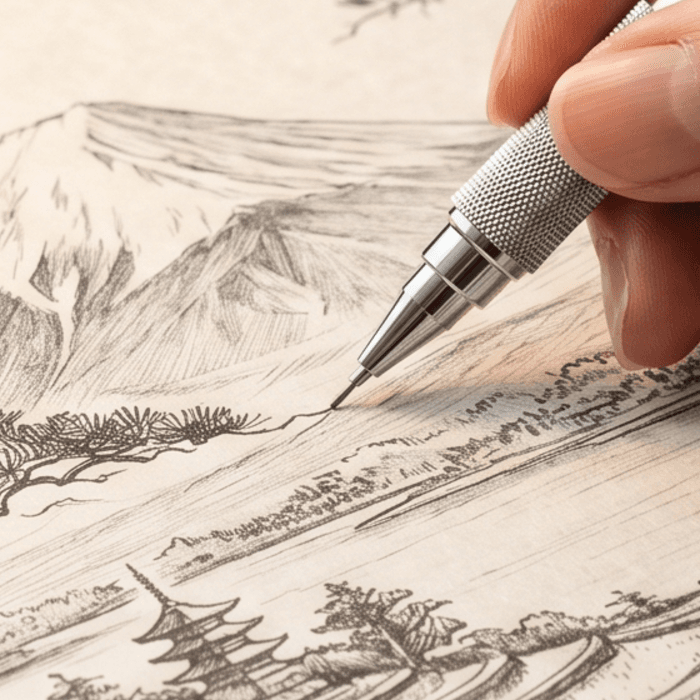
The maki-e barrel, the knurled grip, and the instrument at work.
Why It Costs What It Costs
The price is not a markup on materials, though the materials are extraordinary. It is the cost of time that cannot be compressed. Urushi cures on its own schedule. Charcoal polishing cannot be mechanised. The master, who trained under his father for nineteen years before he was permitted to sign a piece, completes six to eight in a year and will complete a finite number more in his lifetime. You are not buying a pencil. You are buying a measurable fraction of one man's remaining working hours — and the seven generations that taught his hand what to do.
Specifications
Technique
Togidashi Maki-e (polished-out sprinkled gold)
Motif
Sakura-nagashi — cherry blossoms on flowing water
Body
Kuro-gaki persimmon, 40+ coats of Wajima urushi
Gold
Kanazawa 24k leaf & graded kinpun powder
Mechanism
0.5 mm drop-clutch, knurled rhodium grip
Atelier
Urushibara, Wajima — established 1789
Lead Time
Approx. 11 months from commission
Price
¥3,400,000 — approx. €21,000
Each piece is presented in a kiri-wood box on hand-laid washi, the cap engraved with the collector's single-initial monogram and accompanied by the master's signed and sealed certificate.
Commission This Piece
Commissions are accepted by application only, in strict order of receipt. Each begins with a conversation about the monogram and the season of blossom.
Enquire to CommissionNext Object
Horology · F.P. Journe
Sonnerie Souveraine